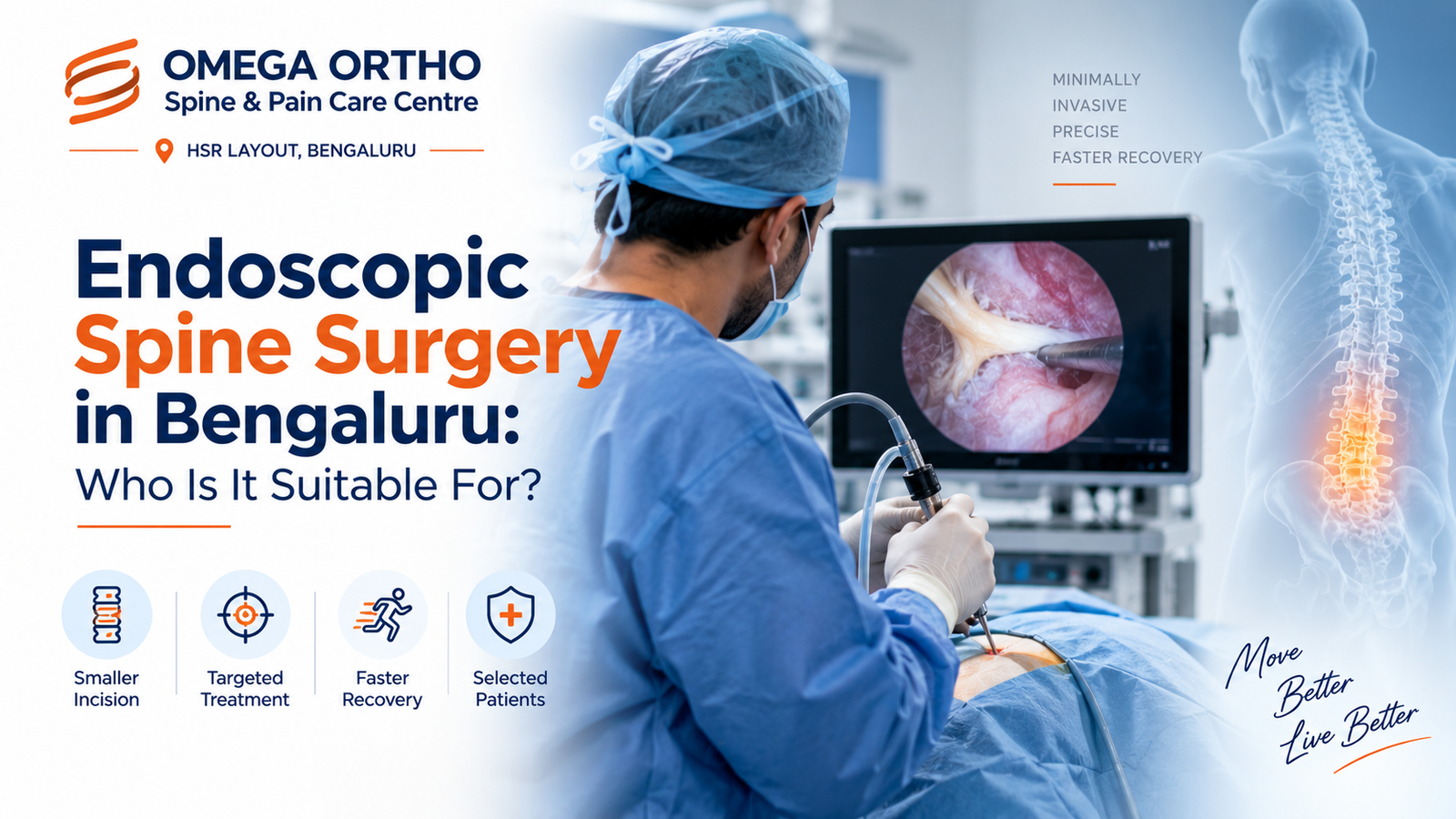
When a patient is told that spine surgery may be necessary, one of the first questions is often:
“Doctor, can this be treated with endoscopic spine surgery?”
It is an understandable question.
Endoscopic spine surgery has received increasing attention because it can allow selected spinal conditions to be treated through a small working corridor using a specialised endoscope. For the right patient and the right diagnosis, it can be an effective minimally invasive approach.
But there is an important point that I always explain to patients:
Endoscopic spine surgery is not suitable for every back problem, and having a small incision does not automatically make an operation the right treatment.
The first decision should always be whether surgery is necessary.
The second is whether an endoscopic technique can safely and effectively address the particular problem.
That is why my approach remains:
Conservative First. Surgery When Necessary.
When surgery is genuinely indicated, the technique should be selected according to the patient’s condition, anatomy, symptoms and surgical objective.
What Is Endoscopic Spine Surgery?
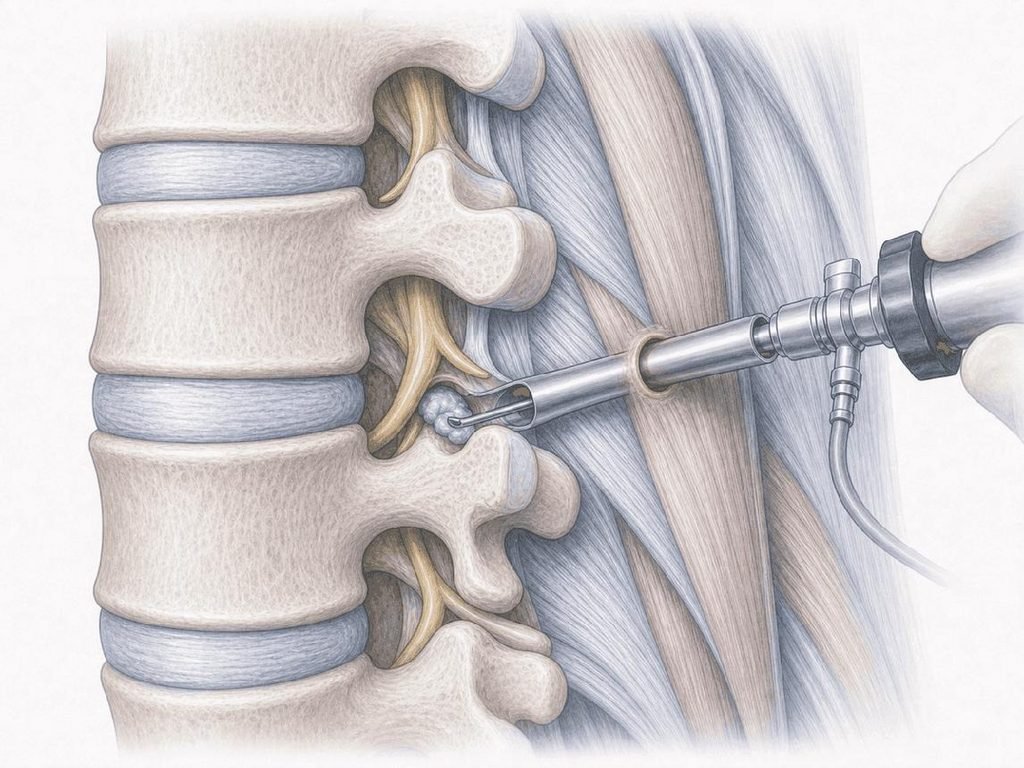
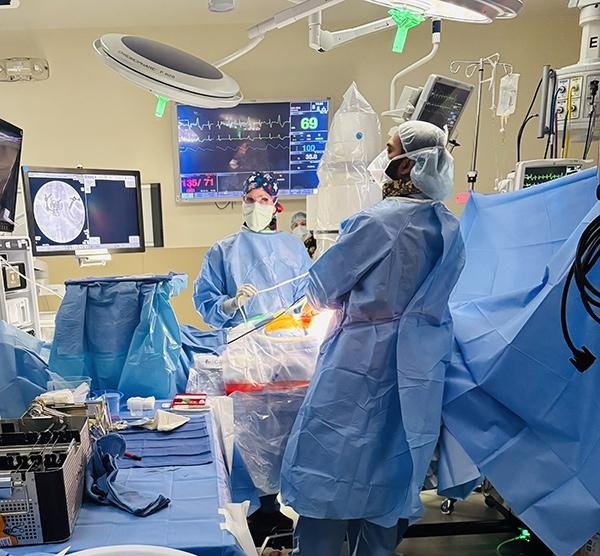
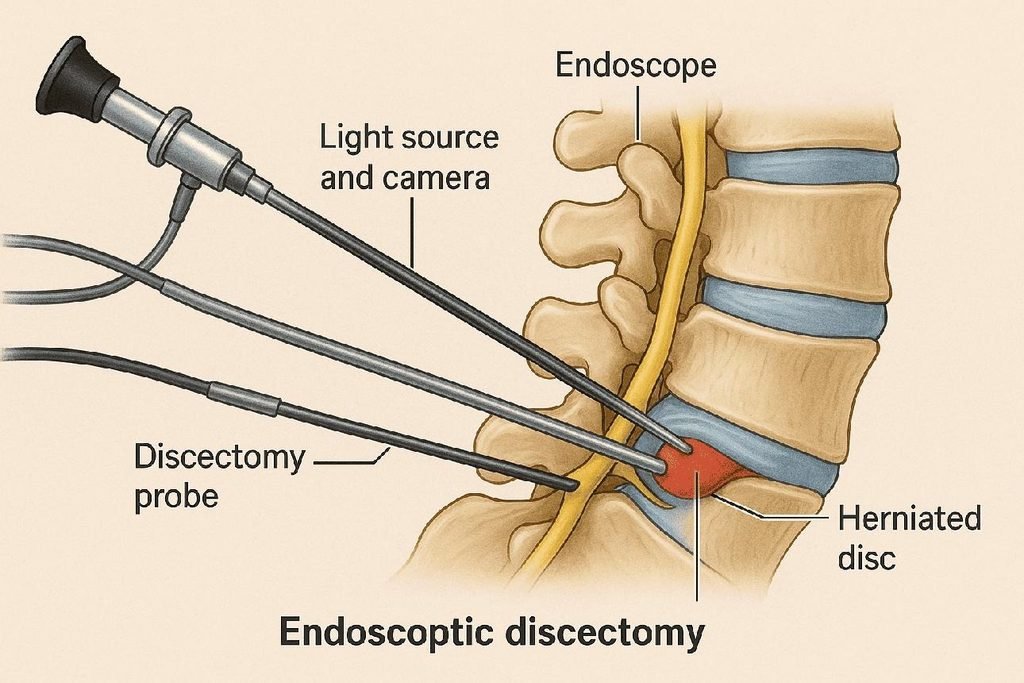
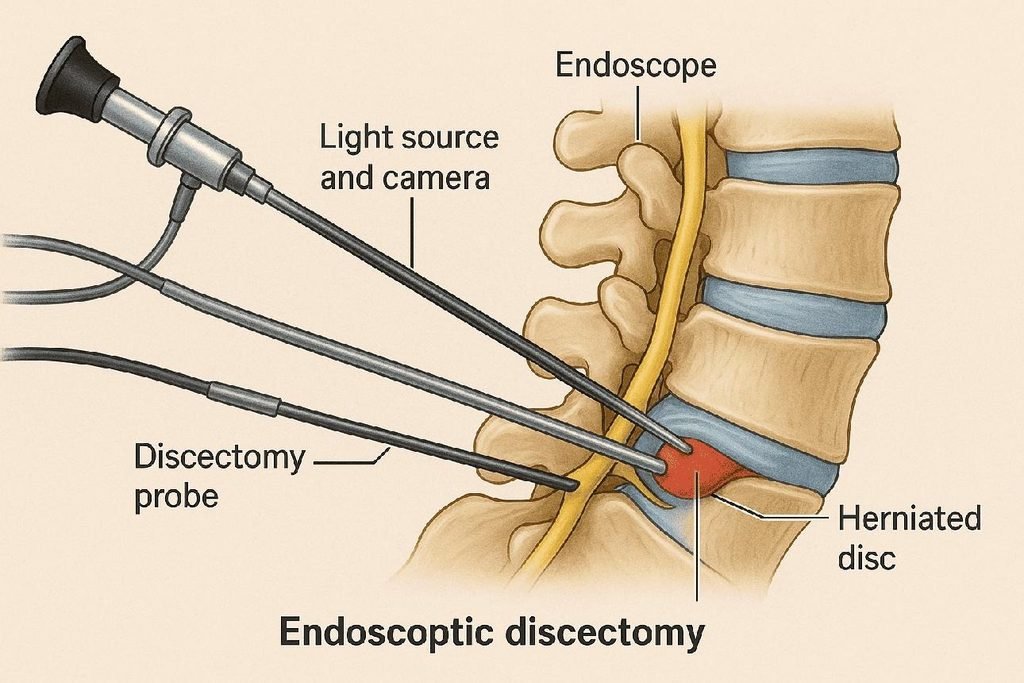
Endoscopic spine surgery is a type of minimally invasive spine surgery in which a surgeon uses a specialised endoscope, a thin instrument with a camera and working channels, to access a particular area of the spine.
The endoscope allows the surgeon to see the relevant structures through a small access point.
Depending on the condition and surgical approach, specialised instruments can be introduced through the working channel to remove disc material, decompress a nerve or address another specific structural problem.
Unlike traditional open surgery, the surgical approach can involve a smaller access corridor in appropriately selected cases.
However, the size of the incision is not the main measure of success.
The goal is to safely achieve the required surgical objective.
Why Is Endoscopic Spine Surgery Considered?
For appropriately selected patients, an endoscopic approach may offer several potential advantages.
These can include:
- Smaller access incision
- Less disruption of surrounding tissues in suitable procedures
- Reduced postoperative discomfort in some patients
- Earlier mobilisation in selected cases
- Shorter hospital stay for appropriate procedures
- Potentially faster return to routine activities
The actual recovery depends on the patient’s diagnosis, procedure, general health, occupation and individual healing.
It is important not to promise that every patient will experience the same recovery.
Minimally invasive surgery does not mean risk-free surgery, and it does not guarantee a faster recovery for everyone.
Who May Be a Candidate for Endoscopic Spine Surgery?
This is the most important question.
There is no single symptom, MRI finding or age that automatically makes someone suitable for endoscopic spine surgery.
A patient may be considered for an endoscopic procedure when several factors come together:
- There is a clearly identified spinal problem.
- The symptoms are consistent with that problem.
- Appropriate non-surgical treatment has not provided sufficient improvement, or there is a clear reason for intervention.
- The imaging findings correspond with the clinical examination.
- The specific pathology can be safely and effectively treated through an endoscopic approach.
- The patient’s overall health is suitable for the procedure.
Depending on the diagnosis, endoscopic techniques may be considered for selected cases of disc herniation and nerve compression, among other conditions.
Endoscopic Spine Surgery for a Slipped Disc
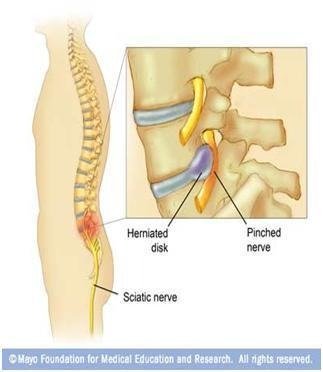
A slipped disc, more accurately referred to as a herniated or prolapsed disc, occurs when disc material extends beyond its normal boundaries.
If the herniated disc compresses or irritates a spinal nerve, the patient may develop:
- Lower back pain
- Buttock pain
- Leg pain
- Sciatica
- Numbness
- Tingling
- Weakness
Many patients with a slipped disc improve without surgery.
Therefore, finding a disc herniation on an MRI is not by itself an indication for endoscopic surgery.
However, in a patient with persistent, significant nerve-related symptoms and imaging that clearly corresponds with the clinical findings, surgical decompression may become appropriate.
For selected disc herniations, an endoscopic discectomy may be one of the surgical options.
Endoscopic Surgery for Sciatica
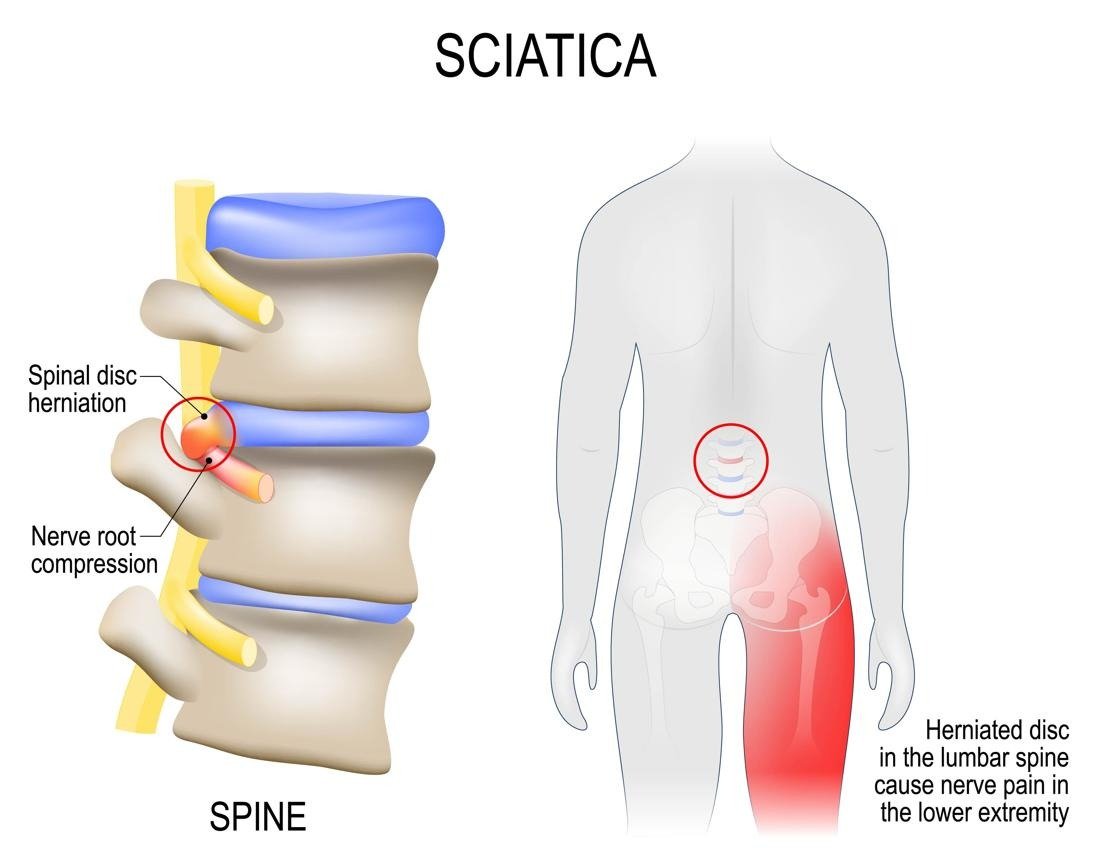
Sciatica refers to pain and other symptoms caused by irritation or compression of nerves contributing to the sciatic nerve.
A herniated lumbar disc is a common cause, but sciatica can also occur because of other spinal conditions.
Symptoms may include:
- Pain from the lower back into the buttock
- Pain travelling down the leg
- Burning or electric-shock-like pain
- Tingling
- Numbness
- Weakness
If the underlying cause is a focal disc herniation compressing a nerve and the patient meets appropriate criteria for surgery, an endoscopic decompression may be considered.
However, not every patient with sciatica needs surgery.
Many cases improve with non-surgical treatment.
What About Spinal Stenosis?
Spinal stenosis occurs when there is narrowing around the spinal canal or nerve passageways.
Patients may experience:
- Leg pain while standing
- Leg pain while walking
- Numbness
- Leg heaviness
- Reduced walking distance
- Symptoms that improve when sitting or bending forward
Endoscopic or minimally invasive decompression may be considered for selected patients with spinal stenosis.
However, stenosis can vary significantly from one patient to another.
The location and extent of narrowing, spinal stability, symptoms and other anatomical factors all influence the choice of treatment.
A patient with isolated nerve compression may require a very different operation from someone with significant instability or a complex spinal deformity.
Is Endoscopic Spine Surgery Suitable for Back Pain Alone?
This is an important distinction.
Back pain alone does not automatically mean that endoscopic spine surgery is appropriate.
There are many causes of lower back pain that do not have a surgical solution.
For example, non-specific low back pain, muscular pain and many degenerative conditions may be managed with:
- Exercise
- Physiotherapy
- Rehabilitation
- Activity modification
- Appropriate medication
- Lifestyle measures
- Other non-surgical treatments
The presence of a disc bulge or degeneration on an MRI does not automatically mean that the finding is causing the pain.
If the pain generator cannot be clearly identified, performing spine surgery simply because an MRI shows abnormalities may not provide the expected benefit.
This is one of the reasons a detailed clinical assessment is so important.
What Conditions May Be Considered for Endoscopic Spine Surgery?
Depending on the patient’s anatomy, diagnosis and the surgeon’s assessment, endoscopic techniques may be considered for selected cases involving:
Lumbar disc herniation
A herniated disc compressing a nerve can sometimes be treated through an endoscopic approach.
Lumbar nerve compression
Selected focal nerve compression conditions may be amenable to endoscopic decompression.
Foraminal stenosis
Narrowing around the opening through which a spinal nerve exits may sometimes be treated using a minimally invasive approach.
Selected spinal stenosis
Certain forms of spinal canal or lateral recess narrowing may be suitable for endoscopic decompression.
Selected recurrent disc problems
In some patients who have previously undergone spine surgery, an endoscopic approach may be considered depending on the anatomy and previous procedure.
Selected cervical spine conditions
Endoscopic techniques are evolving in cervical spine surgery, but suitability depends heavily on the specific condition and surgical objective.
The exact procedure should always be decided after evaluating the individual patient.
Who May Not Be Suitable for Endoscopic Spine Surgery?
Endoscopic surgery is not appropriate for every spinal condition.
An alternative approach may be more suitable when there is:
- Significant spinal instability
- Major deformity
- Extensive structural disease
- Complex multilevel pathology
- Certain fractures
- Certain tumours or infections
- Conditions requiring extensive reconstruction
- Anatomy that cannot be safely addressed through an endoscopic approach
In such cases, another minimally invasive or conventional surgical approach may provide a safer and more effective solution.
The important principle is:
Do not choose the procedure first. Choose the appropriate treatment for the diagnosis.
How Do You Know if You Are a Candidate?
When evaluating a patient for endoscopic spine surgery in Bengaluru, I consider several factors.
1. Your symptoms
Where exactly is the pain?
Does it stay in the back?
Does it travel into the leg?
Is there numbness?
Is there weakness?
2. Your clinical examination
A neurological examination can help determine whether a particular nerve is being affected.
3. Your imaging
MRI can provide important information about the discs, nerves and spinal canal.
But the scan must correspond with your symptoms.
4. Previous treatment
If the condition is suitable for conservative care, appropriate non-surgical treatment is generally considered first.
5. Duration and severity
Persistent disabling symptoms may require a different approach from a mild episode that is already improving.
6. Your overall health
Medical conditions, previous operations and other factors can influence whether a particular surgical technique is appropriate.
7. The surgical objective
Most importantly, I ask:
What exactly do we need to accomplish with surgery?
Once that is clear, we can determine which surgical approach is most appropriate.
Does Everyone Need Conservative Treatment Before Surgery?
Not necessarily.
There are situations where waiting through a prolonged period of conservative treatment may not be appropriate.
For example, significant or progressive neurological weakness requires timely assessment.
Similarly, certain serious causes of nerve compression may require urgent treatment.
But when a patient has uncomplicated back pain or stable symptoms without neurological deterioration, non-surgical treatment is often a reasonable starting point.
This is why “Conservative First” does not mean “Surgery Never.”
It means:
Use the least invasive effective treatment when it is safe to do so, and use surgery when the clinical situation genuinely requires it.
What Happens Before Endoscopic Spine Surgery?
If surgery is being considered, the consultation is not simply about looking at an MRI and scheduling an operation.
A proper evaluation includes:
Detailed history
We discuss the nature, duration and progression of symptoms.
Physical and neurological examination
This helps identify nerve involvement and functional problems.
Imaging review
MRI and other imaging are reviewed in relation to the symptoms.
Medical assessment
Existing health conditions, medications and previous operations need to be considered.
Discussion of alternatives
I believe patients should understand what happens if they choose continued conservative care, injections where appropriate, or surgery.
Discussion of expectations
No spine surgery can guarantee that every symptom will disappear.
The expected benefit, limitations and possible risks should be discussed before making a decision.
How Is Endoscopic Spine Surgery Performed?
The exact technique varies depending on the spinal condition.
In broad terms, an endoscope is introduced through a small access point to reach the affected area.
The camera provides magnified visualisation of the relevant anatomy.
Specialised instruments can then be used through the working channel to perform the required procedure.
For a suitable disc herniation, for example, the surgeon may remove the disc material that is compressing the nerve.
For selected stenosis, decompression may be performed to create more space around the affected nerve.
The exact technique, incision, anaesthesia and surgical steps depend on the procedure and patient.
This is why an online description should never be treated as a substitute for a surgeon’s individual explanation.
Is Endoscopic Spine Surgery Done Under General Anaesthesia?
The anaesthetic approach depends on the particular procedure, patient’s health, surgical plan and institutional protocol.
Some endoscopic spine procedures can be performed under regional or local anaesthesia with sedation, while others may be performed under general anaesthesia.
There is no single anaesthetic technique that is correct for every endoscopic spine operation.
The anaesthetist and surgical team will discuss the appropriate plan before surgery.
What Is Recovery Like After Endoscopic Spine Surgery?
Recovery varies considerably.
Some appropriately selected patients can mobilise relatively soon after surgery and may be discharged earlier than patients undergoing more extensive spinal procedures.
However, recovery depends on:
- Type of surgery
- Number of levels treated
- Severity of nerve compression
- Duration of symptoms
- General fitness
- Occupation
- Previous spine surgery
- Individual healing
Leg pain caused by nerve compression may improve relatively quickly in some patients, while numbness or weakness can take longer to recover if the nerve has been affected for a prolonged period.
Surgery removes or decompresses the structural problem. Nerves still need time to recover.
Can I Return to Work After Endoscopic Spine Surgery?
The answer depends on your occupation and the type of procedure.
Someone with a desk-based job may return to normal activities sooner than someone whose work involves:
- Heavy lifting
- Repeated bending
- Construction work
- Long-distance driving
- Manual labour
Your surgeon will provide individual guidance about:
- Walking
- Sitting
- Driving
- Exercise
- Lifting
- Physiotherapy
- Returning to work
- Returning to sports
Do not compare your recovery timeline with another patient’s experience.
What Are the Risks of Endoscopic Spine Surgery?
Like every surgical procedure, endoscopic spine surgery has potential risks.
These can include:
- Infection
- Bleeding
- Nerve irritation or injury
- Dural tear or cerebrospinal fluid leak
- Incomplete symptom relief
- Recurrent disc herniation
- Persistent numbness or weakness
- Need for further surgery
- Anaesthesia-related complications
The exact risks vary according to the procedure and individual patient.
A smaller incision does not eliminate surgical risks.
Before surgery, patients should understand both the expected benefits and possible complications.
Can a Disc Herniate Again After Endoscopic Surgery?
Yes.
Endoscopic discectomy removes the portion of disc material responsible for nerve compression. It does not remove the entire disc.
A recurrent disc herniation can occur in some patients.
The risk depends on several factors and varies between individuals.
Following the postoperative instructions, gradually returning to activity and maintaining appropriate physical conditioning are important parts of recovery.
Is Endoscopic Spine Surgery Better Than Open Surgery?
It is better to ask:
“Which approach is most appropriate for my condition?”
rather than:
“Which surgery is better?”
Endoscopic surgery can be an excellent option for selected conditions.
Traditional or other minimally invasive techniques can also be excellent options for different conditions.
A procedure should be selected based on:
- Diagnosis
- Anatomy
- Severity
- Number of levels
- Stability of the spine
- Previous surgery
- Surgical objective
- Patient factors
A technically impressive procedure is not useful if it is not the right procedure for the patient.
Endoscopic vs Minimally Invasive Spine Surgery
These terms are sometimes used interchangeably, but they are not exactly identical.
Minimally invasive spine surgery is a broader category of techniques designed to reduce unnecessary tissue disruption while achieving the surgical objective.
Endoscopic spine surgery is one type of minimally invasive approach that uses an endoscope and specialised instruments.
So:
Endoscopic spine surgery is a form of minimally invasive spine surgery, but not all minimally invasive spine surgery is endoscopic.
This distinction is useful when discussing treatment options with your surgeon.
Endoscopic Spine Surgery for Patients in Bengaluru
For patients searching for endoscopic spine surgery in Bengaluru, the most important consideration should not simply be whether a surgeon offers an endoscopic procedure.
Ask:
- What is causing my symptoms?
- Do I actually need surgery?
- Is my MRI finding responsible for my symptoms?
- What non-surgical options are available?
- Why is surgery being recommended?
- Is an endoscopic approach appropriate for my particular anatomy?
- What are the alternatives?
- What are the expected benefits?
- What are the risks?
- What happens if I do not have surgery?
A good surgical consultation should give you enough information to make an informed decision.
Endoscopic Spine Surgery in HSR Layout
Patients from HSR Layout, Koramangala, BTM Layout, Harlur, Agara, Bommanahalli, Kudlu, Sarjapur Road, Bellandur and surrounding areas may seek specialist evaluation for conditions such as:
- Slipped disc
- Sciatica
- Nerve compression
- Lumbar disc herniation
- Spinal stenosis
- Persistent lower back pain
- Recurrent leg pain
- Other spine conditions
If you are looking for an endoscopic spine surgeon in HSR Layout, the first step should be an assessment to determine whether an endoscopic procedure is actually appropriate for your condition.
Why the Diagnosis Comes Before the Technique
This is perhaps the most important message of this article.
A patient may come to me and say:
“I want endoscopic spine surgery.”
My response should be:
“First, let’s understand whether you need spine surgery at all.”
If surgery is required, then we can discuss whether an endoscopic approach is suitable.
This sequence matters.
Otherwise, there is a risk of selecting a procedure because it sounds advanced rather than because it is medically appropriate.
The best spine treatment is not necessarily the newest treatment.
It is the treatment that appropriately addresses the patient’s problem.
When Should You Seek a Spine Specialist?
Consider consulting a spine specialist in HSR Layout if you have:
- Persistent lower back pain
- Recurrent sciatica
- Pain travelling down the leg
- Numbness or tingling
- Weakness in the leg or foot
- Difficulty walking
- Persistent symptoms despite physiotherapy
- Symptoms that are affecting work or sleep
- A disc herniation on MRI with corresponding symptoms
- Suspected spinal stenosis
- Repeated episodes of nerve-related pain
You should seek urgent medical attention if back pain is accompanied by new bladder or bowel dysfunction, numbness around the saddle or groin region, or significant progressive weakness.
Endoscopic Spine Surgery Is Not a Shortcut
Patients sometimes think:
Small incision = easy surgery.
That is not correct.
Endoscopic spine surgery requires detailed knowledge of spinal anatomy, appropriate patient selection, careful planning and technical expertise.
The procedure may be less invasive in terms of the access route, but it is still surgery around important nerves and other spinal structures.
Patient selection is therefore extremely important.
The Goal Is Not Just a Smaller Incision
When discussing minimally invasive or endoscopic surgery, it is easy to focus on the size of the incision.
But the real goals are:
Relieve the problem causing the symptoms.
Protect the nerves and other important structures.
Restore function where possible.
Minimise unnecessary tissue disruption.
Help the patient return to normal life safely.
A small incision is beneficial only when the procedure can achieve the required result safely.
Meet Dr. Kiran Tej Daggupati
Dr. Kiran Tej Daggupati
Orthopaedic & Spine Surgeon
Minimally Invasive Spine Specialist
Omega Ortho Spine & Pain Care Centre
504, 22nd Cross Road, HSR Layout, Bengaluru, Karnataka 560102
Appointments: 097435 47999
Dr. Kiran Tej Daggupati evaluates patients with back pain, disc-related problems, sciatica, nerve compression and other spine conditions.
His treatment philosophy is centred around:
Conservative First. Surgery When Necessary.
When surgery is indicated, the surgical approach is selected according to the patient’s condition rather than simply choosing a particular technique.
For selected patients, minimally invasive and endoscopic spine procedures may form part of the surgical treatment plan.
Frequently Asked Questions About Endoscopic Spine Surgery
Is endoscopic spine surgery safe?
Endoscopic spine surgery is an established minimally invasive approach for selected spinal conditions, but like every surgery, it has potential risks. Safety depends on appropriate patient selection, surgical planning, technique and the individual’s medical condition.
Is endoscopic spine surgery suitable for everyone with a slipped disc?
No. Many slipped discs improve without surgery. Endoscopic surgery may be considered when symptoms and imaging indicate a surgical problem that can appropriately be treated through an endoscopic approach.
Can endoscopic spine surgery treat sciatica?
It can treat selected causes of sciatica, particularly when a disc herniation or focal nerve compression is responsible and surgery is clinically indicated.
Can endoscopic spine surgery treat lower back pain?
It depends on the cause. Endoscopic surgery is not a general treatment for non-specific lower back pain. There needs to be a specific structural problem that can reasonably be addressed surgically.
How long does endoscopic spine surgery take?
The duration varies according to the condition, spinal level, number of levels and procedure being performed. Your surgeon can give you a more accurate estimate after reviewing your case.
How soon can I walk after endoscopic spine surgery?
Many patients can mobilise relatively early after selected endoscopic procedures, but the exact timeline depends on the operation and individual health.
How soon can I return to work?
This depends on your procedure and occupation. Desk-based work may allow an earlier return than heavy physical work. Your surgeon should provide individual advice.
Is endoscopic spine surgery better than traditional spine surgery?
Not automatically. Endoscopic surgery can be advantageous for selected conditions, while other minimally invasive or conventional procedures may be more appropriate for different problems.
Does endoscopic spine surgery leave a scar?
The access incision is generally small, so the resulting scar can be smaller than that associated with some traditional open procedures. However, the exact incision and scar vary depending on the operation.
Can a slipped disc come back after endoscopic surgery?
Yes. Recurrent disc herniation can occur after discectomy. Your individual risk depends on several factors.
Is endoscopic spine surgery available in HSR Layout, Bengaluru?
Patients in HSR Layout and surrounding Bengaluru areas can seek an assessment from an experienced spine specialist to determine whether an endoscopic procedure is appropriate for their particular condition.
Final Word From the Spine Surgeon
Endoscopic spine surgery is an important development in modern spine care.
For appropriately selected patients, it can provide a minimally invasive way of treating certain spinal problems.
But I would encourage patients not to start the decision with the question:
“Can I have endoscopic surgery?”
Start with:
“What is causing my symptoms, and do I actually need surgery?”
If conservative treatment is appropriate, that should be considered first.
If injections or other interventions have a role, they should be used selectively.
If surgery is genuinely required, the next question is which procedure can safely and effectively address the problem.
For some patients, that may be endoscopic spine surgery.
For others, another minimally invasive or conventional procedure may be more appropriate.
The right treatment is not the one with the smallest incision.
The right treatment is the one that best addresses the patient’s problem safely and appropriately.
Conservative First. Surgery When Necessary.
Medical Disclaimer
This article is intended for general educational purposes and does not replace an individual medical consultation. Endoscopic spine surgery is not appropriate for every spinal condition. Treatment decisions should be based on the patient’s symptoms, medical history, physical examination, imaging and other relevant clinical factors. Surgical risks and expected benefits vary from patient to patient. If you experience new bladder or bowel dysfunction, numbness around the groin or saddle region, or significant or progressive weakness, seek urgent medical attention.